AD| Sensory Play with the Bandai National Geographic STEM Range.
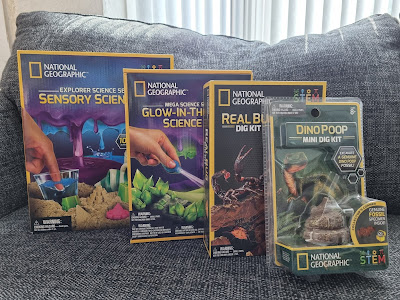
This month as part of the Bandai National Geographic Stem blogger club, we’ve been playing with a new set of toys and activities. Inside our box this month, we have the following:
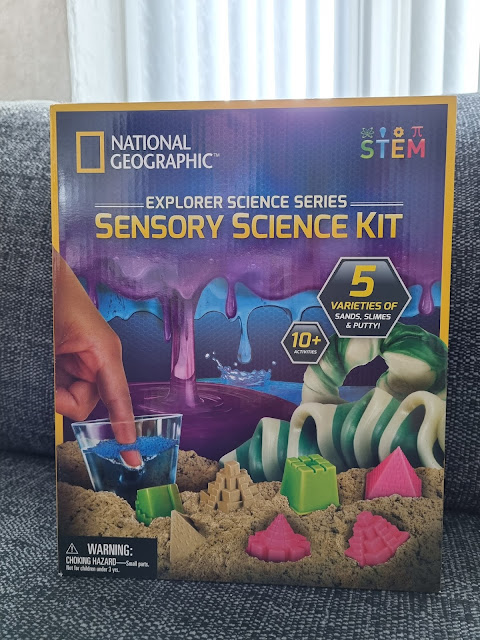
National Geographic Explorer Science Sensory Kit
National Geographic Glow In The Dark Mega Science Kit
National Geographic Bug Dig Kit
National Geographic Dino Poop Mini Dig Kit
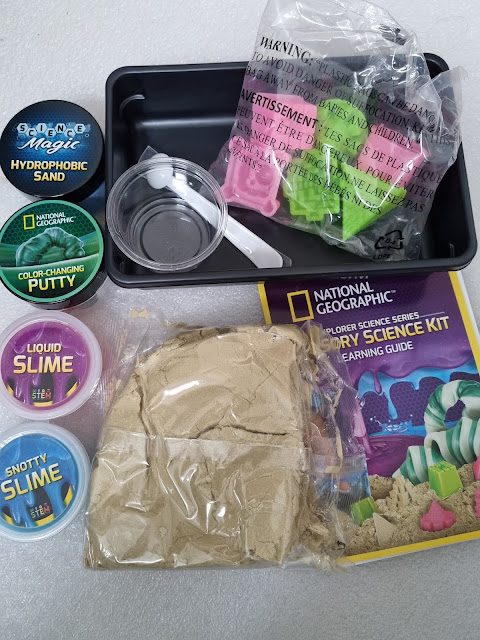
As always I’m going to start with our favourite, and this month it had to be the National Geographic Explorer Science Sensory Kit which is so much fun. With 10 activities to do and 5 varieties of sands, slimes and putty’s, there’s a whole load of fun to be had with this kit. The box includes 2 sand kits, 2 slime kits and a colour changing putty. As well as instruction.
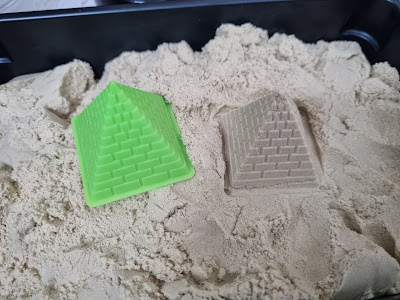
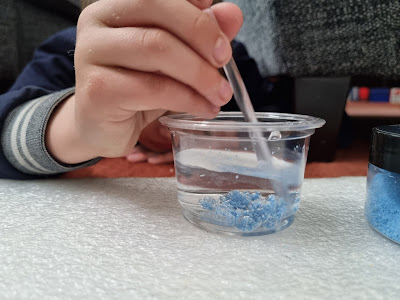
The snotty slime and liquid slime come pre made so they’re ready to play right out of the box. The Colour changing putty is specially formulated to change colours when warmed or cooled and also comes ready to play with. You get a plastic container and a big bag of sand to play with and a bag full of little sandcastles to play with too. We’ve been building sandcastles for hours. The Hydrophobic sand that comes in the kit is amazing. It’s great for conducting experiments with because it doesn’t get wet, which is so fascinating to watch. The kids absolutely love laying with it ad have BOTH been sitting there with it for hours. It’s ace!
For the price tag of £24.99, we think it’s worth every penny.
Next up we have the National Geographic Glow In The Dark Mega Science Kit which contains four awesome science activities that will illuminate your child’s imagination. This kit includes two glow in the dark slime kits, a glow in the dark putty, and so much more.
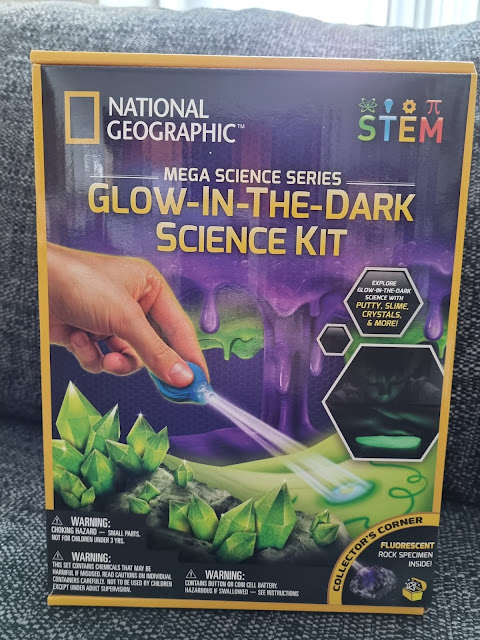
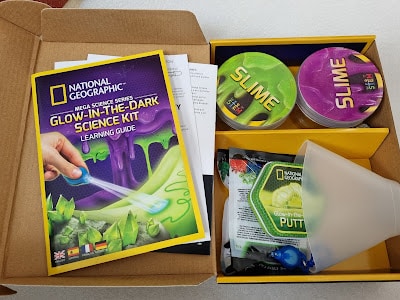
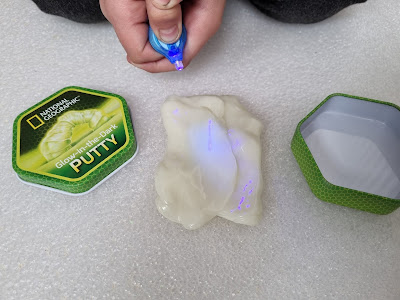
This box includes 2 glow in the dark slime kits which you have to make yourself this time. It’s really easy to make and only takes around 5 minutes to do so. Both Lily and Ryan love slimes so this was right up their street. These kits are aimed at children aged 8 years and above but my two are 10 and 14 and love playing with them. It’s not very often I get something that they actually want to play with and put down their phones and ipads to do so. The glow in the dark putty comes with a little UV light that lets you draw glowing images or words in the putty, that shows up in the dark, It’s pretty cool. There’s also a grow your own glow in the dark crystal
Fluorescent wernerite specimen that glows up bright when you shine your UV light on it.
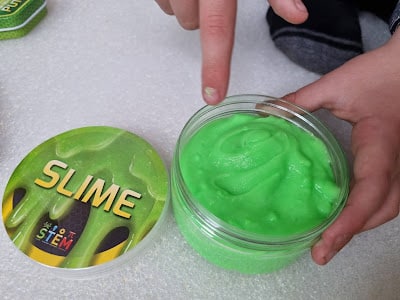
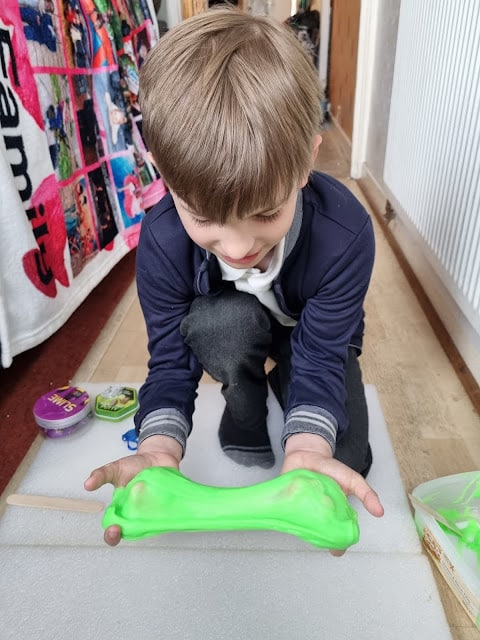
Ryan loves the slime and I love that it has it’s own container to stay in so it doesn’t make any mess around the house. He’s had his slime out several times to play with and then puts it back into it’s storage tub when he’s done. It’s nice to have a storage container so it’ll last.
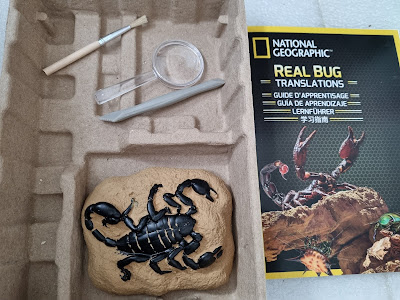
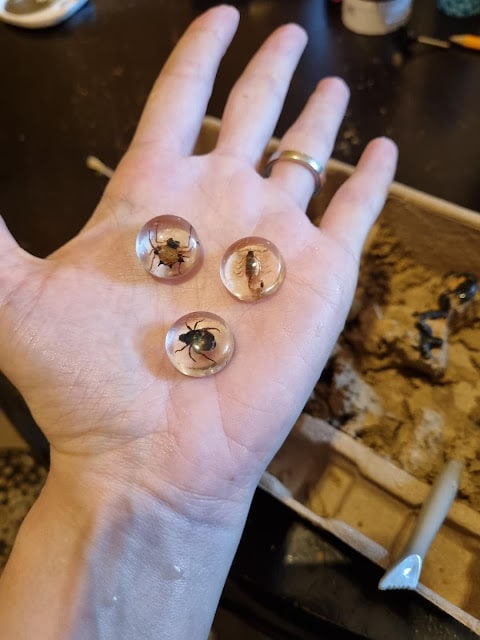
Next up we had something a bit different to the last two with some digging kits. The first one is the National Geographic Bug Dig Kit which costs £9.99 and contains 1 digging brick containing 3 preserved bugs, a fortune beetle, scorpion and spiny spider. You also get a set of archaeological digging tools, a full colour learning guide and a magnifying glass.
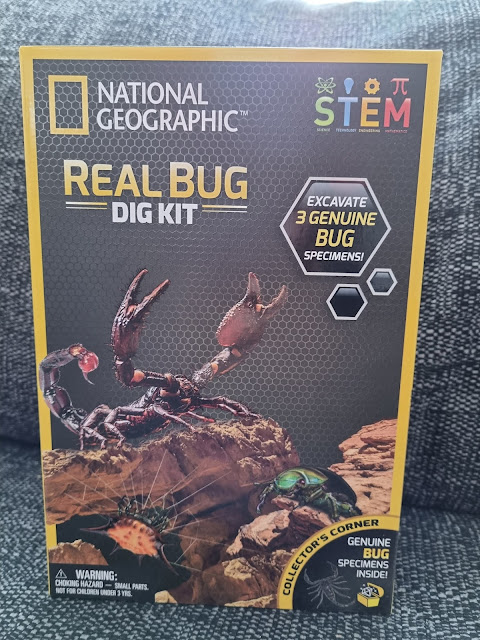
The National Geographic’s full colour learning guide will teach your children all about a fascinating variety of insects, arachnids and arthropods. With this exciting Dig Kit you get to dig up, explore and keep 3 amazing insects. Ryan was so fascinated by them all.
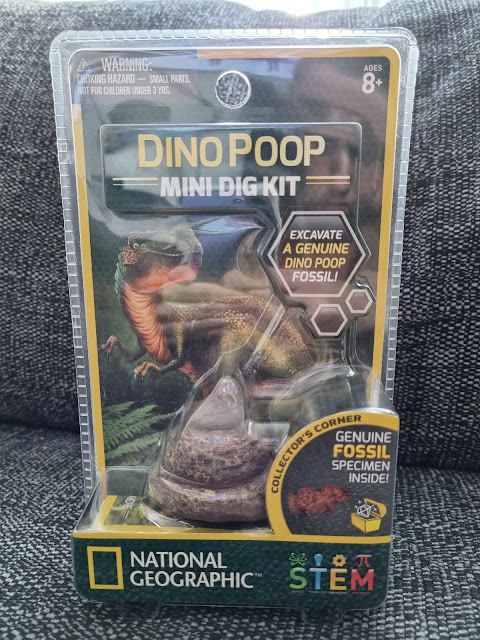
Last but not least we have the National Geographic Dino Poop Mini Dig Kit which comes with a genuine specimen inside each kit! It’s a smaller kit but no less fun. You get to excavate soft dig brick material to find your specimen. All the tools you’ll need are included in the kit.
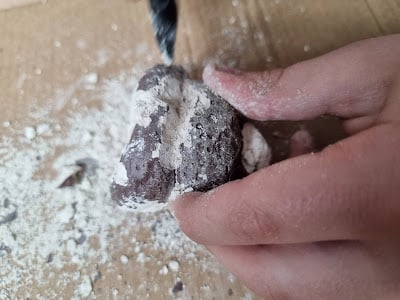
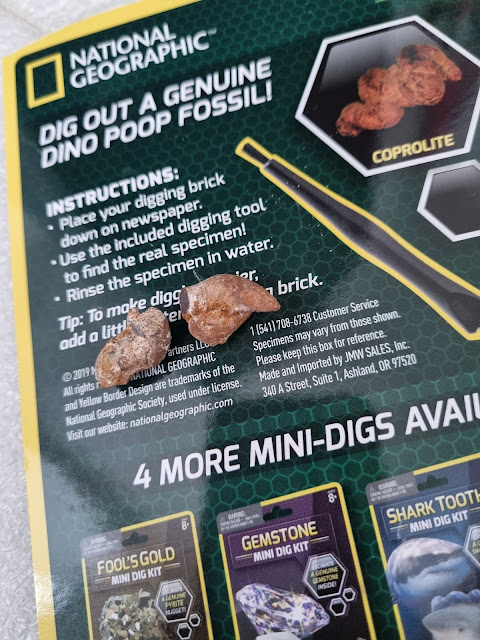
Ryan liked digging but sadly broke his specimen by cutting it in half – oops.
We’ve enjoyed doing all of the activities this month but have to say that the slime and the sand have been our favourites. Ryan loves playing with slime as it keeps him happy for hours. Lily has taken a liking to the sand and is currently sat at the table building mini sandcastles as I speak. Our National Geographic STEM kits have sure kept us all entertained this week.
We can’t wait to see what we get to play with for our final month. Watch this space . .
Disclosure: We received our NG Stem Sets for free in return for honest reviews.