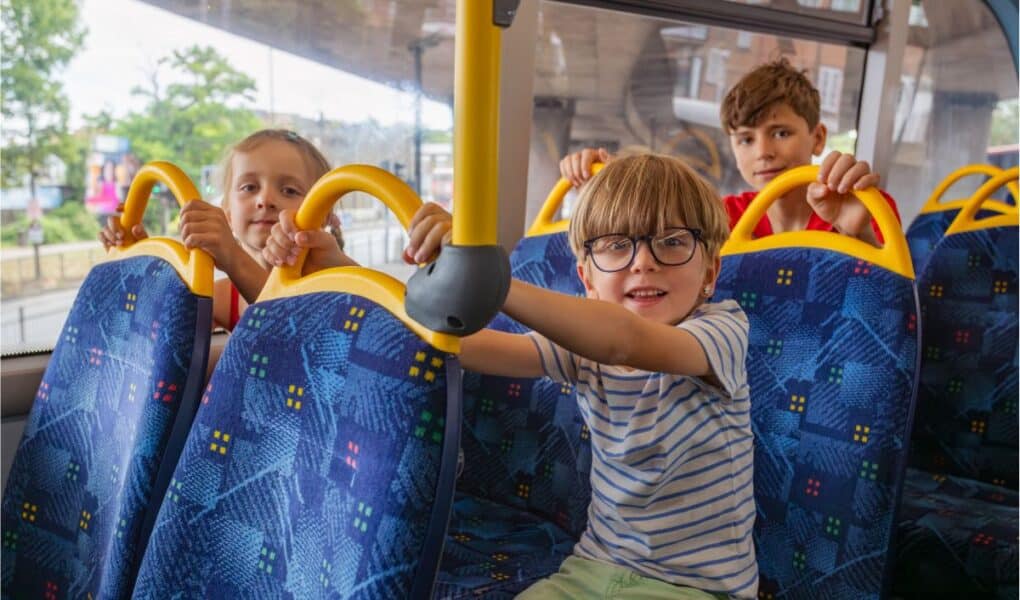
Most mornings begin with a scramble. Lost shoes, half-eaten toast, a lunchbox that ends up on the kitchen counter instead of the bag. Then comes the drive: the queue at the school gates, the search for somewhere to stop, the dash back for the day ahead. For plenty of families, the daily school run is the most stressful part of the whole day, and it repeats itself every single morning and afternoon.
The obvious fix is to hand the driving over to someone else. But the school bus does far more than free up a parent’s diary. Once you look past the logistics, the humble bus run turns out to be quietly good for children in ways that rarely get talked about.
The problem is bigger than traffic
The strain of the daily drive is not only about time. It is the mental load of coordinating two or three drop-offs, the cost of fuel, and the tension that spills into the first and last conversation of the day with your child. Rushed goodbyes and frazzled reunions set a tone, and children pick up on it more than we realise.
There is a knock-on effect too. When mornings are frantic, breakfast gets skipped, homework gets forgotten, and everyone arrives feeling behind before the day has even started. The drive itself becomes the thing that shapes the mood, rather than a simple journey from one place to another.
What the bus quietly solves
Swapping the car for the coach removes a surprising amount of that pressure. The obvious win is the return of your own time, whether that goes towards work, a calmer morning, or simply a coffee that stays hot. But the deeper benefits land with the children.
Riding the bus builds independence in small, manageable steps. Children learn to be ready on time, to look after their belongings, and to manage a short stretch of the day without a parent close by. It is a gentle rehearsal for the greater independence that comes later, and it happens within a safe, supervised setting.
The bus is also a social space. Friendships form and deepen on those journeys, across year groups and between children who might not otherwise cross paths. Older pupils often look out for the younger ones, and that everyday mix helps build the kind of easy confidence that classrooms alone cannot always provide.
A calmer bookend to the day
There is something valuable about the buffer a bus journey creates. In the morning it gives children time to wake up properly and settle before lessons begin. In the afternoon it offers a wind-down, a chance to chat or simply gaze out of the window before home life resumes. Schools that think carefully about the whole school day, such as a well-regarded prep school in Kent, often see the bus service as part of pastoral care rather than a bolt-on extra.
That framing matters. When a school treats the journey as part of a child’s experience, the routes are planned thoughtfully, the staff are familiar faces, and parents feel confident about the arrangement.
Weighing it up for your family
The bus will not suit everyone, and that is fine. If your route is short or your working pattern makes drop-off easy, the car may still make sense. But if the daily run is grinding you down, it is worth asking what your school offers before assuming the drive is the only option.
The point is simple: the school bus is not just a convenience. It hands children a little more independence, a little more social time, and a calmer start and finish to their day, while giving parents back something in short supply. Holmewood House School is one of many settings that build this kind of support into daily life, and you can explore more at https://holmewoodhouse.co.uk.
Next time the morning descends into chaos, it may be worth remembering that the answer could be pulling up outside your door.
—
*This article was contributed by the team at Holmewood House School, an independent prep school in Tunbridge Wells, Kent, offering education for children aged 3–13. Holmewood House places pastoral care, wellbeing and everyday practicalities at the heart of school life, supporting families as well as pupils.*