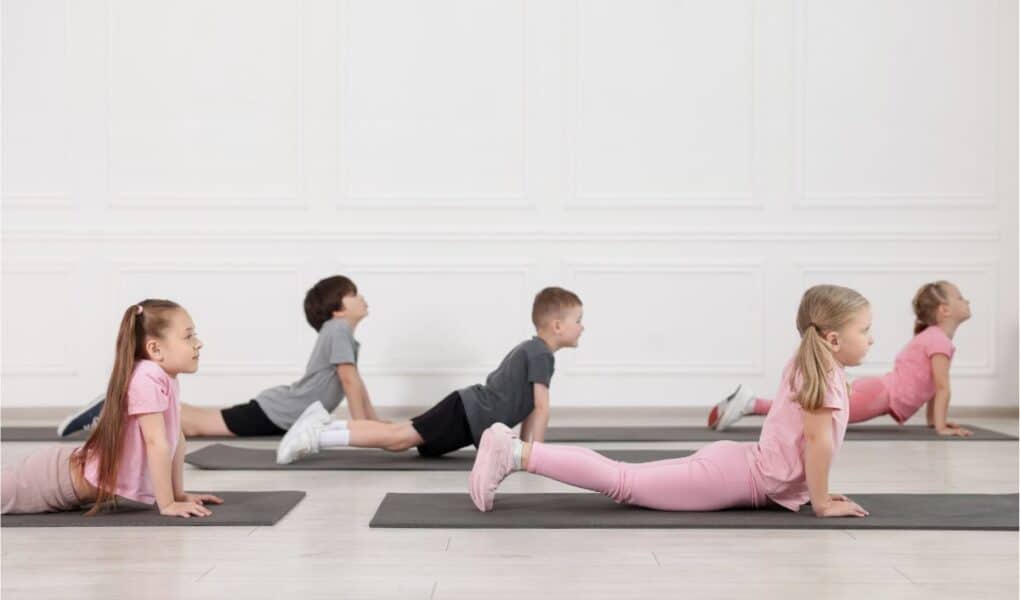
Picture two classrooms after lunch. In one, children fidget, chatter and struggle to settle back into their work. In the other, the group takes a few slow breaths, stretches, and eases into the afternoon with steadier attention. The difference often comes down to a simple practice that more schools are folding into the timetable: yoga.
But not all yoga looks the same, and the version that works for a class of restless seven-year-olds is quite different from the version an adult might recognise from a studio. Understanding that difference helps parents and teachers make sense of why it belongs in the school day.
School yoga versus studio yoga
Adult yoga tends to prize precision, longer holds and a quiet, inward focus. Children’s yoga borrows the same roots but flips the emphasis. Poses become animals, stories and games. A downward dog turns into a barking dog; a tree pose becomes a chance to wobble, laugh and try again.
The goal is not perfect alignment. It is movement, breath and a moment of calm dressed up as play. Where a studio class might last an hour, a classroom session can work its magic in ten minutes. Short, frequent and unpolished beats long and formal every time when the participants are small.
Calm children versus quiet children
It is worth drawing a line between the two, because they are easily confused. A quiet classroom might simply be a managed one, held together by rules and reminders. A calm classroom is different: the children themselves have the tools to settle.
That is what breathing exercises and gentle stretches offer. Rather than being told to calm down, children learn how. A few rounds of slow breathing before a spelling test, or a stretch break between demanding lessons, gives them a way to regulate their own energy. Over time, that self-awareness matters far more than silence on demand.
Focus that lasts versus focus that fades
Sugar, screens and a packed schedule can give short bursts of attention that drop away quickly. Yoga works in the opposite direction. By pairing movement with breath, it helps children reset without a crash afterwards.
Teachers who use it often report that the benefits carry into the next task. Handwriting steadies, listening improves, and transitions between activities become smoother. It is a small investment of time that pays back across the rest of the lesson.
Whole-school habit versus one-off treat
Perhaps the biggest contrast is how yoga is used. As a one-off novelty, it is pleasant but forgettable. Woven into the routine, it becomes a shared language the whole school understands: a way to arrive settled in the morning, or to release tension before an exam.
This is where thoughtful planning and the right resources make a difference. Schools that build wellbeing into daily life, rather than treating it as an add-on, tend to see the steadiest results. Working alongside experienced providers of practical support for schools can help staff introduce these routines in a way that feels natural rather than forced, so the practice sticks.
Making it work at home
Parents can echo the same ideas without any special equipment. A minute of “smell the flower, blow out the candle” breathing at bedtime, or a few animal stretches before homework, brings the classroom benefits home. Consistency counts for more than complexity. A short daily habit will always outperform a grand weekend session that never gets repeated.
The message from schools embracing yoga is simple. Calmer children are not quieter children who have been told to behave. They are children who have learned to find their own steadiness, and who carry that skill well beyond the mat.
For more on how schools and businesses can support wellbeing across the school day, visit https://sthelens.enterprises
—
*This article was contributed by the team at St Helens Enterprises Ltd, a Merseyside-based provider working with schools and education businesses to support learning, wellbeing and everyday operations. St Helens Enterprises Ltd partners with independent schools and nurseries across the region, offering practical resources and services that help settings run smoothly and put children first.*